.png)
Compare cloud and traditional EPOS systems for retail, hospitality, and service businesses
Integrated card payments, stock management, and sales reporting in one system
Hardware, software, and installation packages — compare the full cost of ownership
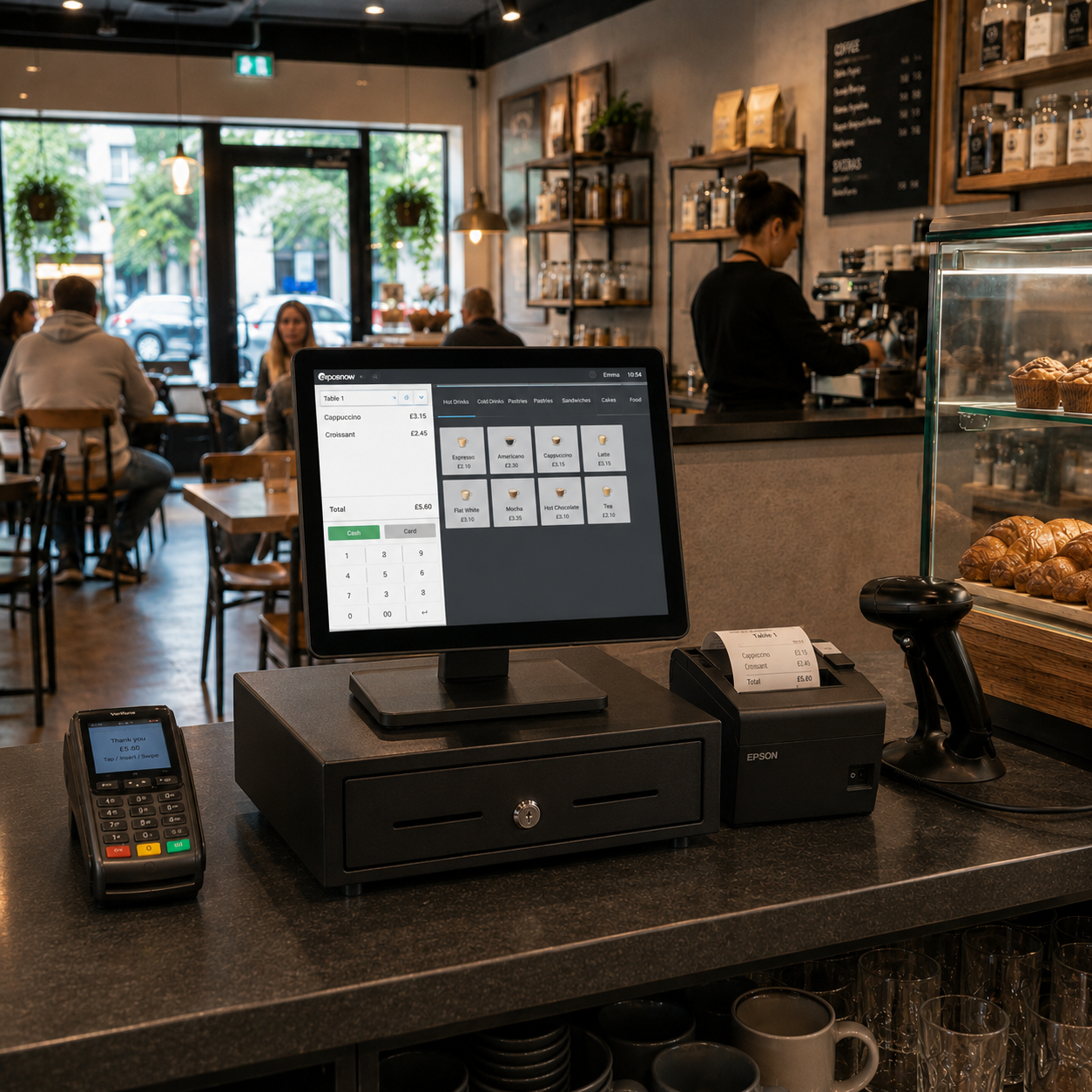
An EPOS (Electronic Point of Sale) system is the combination of hardware and software that manages sales transactions, inventory, and customer data at the point of purchase. Modern cloud-based EPOS systems include a touchscreen terminal or tablet, barcode scanner, receipt printer, and card reader — all connected to a management platform that tracks stock levels, generates sales reports, manages staff access, and integrates with accounting software. They are used across retail, hospitality, hair and beauty, and service businesses of all sizes.
A good EPOS system is far more than a till — it gives you real-time visibility of what is selling, what is running low in stock, and how your business is performing at any time of day. Cloud-based systems allow you to manage your business remotely, integrate card payments to eliminate manual reconciliation, and reduce the human errors associated with traditional cash handling. For hospitality businesses in particular, integrated EPOS drives efficiency across the entire operation.
![[headshot]](https://cdn.prod.website-files.com/69b5c32fee9766011b68547b/69b82cced39ba3055dad461a_Untitled%20design%20(16).png)
![[headshot] image of customer (for a dental office)](https://cdn.prod.website-files.com/69b5c32fee9766011b68547b/69b82ccf27c4f98621ebd3e7_Untitled%20design%20(17).png)
![[headshot] image of customer for an insurance agency & company](https://cdn.prod.website-files.com/69b5c32fee9766011b68547b/69b82ccf317632a73a2e7ee5_Untitled%20design%20(18).png)

Explore top UK suppliers and save on essential services. Compare options side by side to find the best fit for your business needs.
Find the best deals on business electricity, gas, water, and broadband. Save time and reduce costs with tailored quotes.
Compare business loans, asset finance, and more. Access flexible funding options to support your company’s growth.
Protect your business with the right cover. Compare public liability, professional indemnity, and other key policies.
Upgrade your business communications. Compare broadband, leased lines, and IT support for seamless operations.
Find cleaning, maintenance, and security providers. Keep your workplace running smoothly and safely.
Discover the best business software for your needs. Compare CRM, marketing, and productivity tools to improve efficiency and support your growth.
Common questions from businesses comparing EPOS system options.