.png)
Prepaid and credit expense cards with per-card spending limits and real-time visibility
Receipt capture on mobile — OCR technology eliminates manual data entry
Integrates with Xero, QuickBooks, Sage, and major accounting platforms
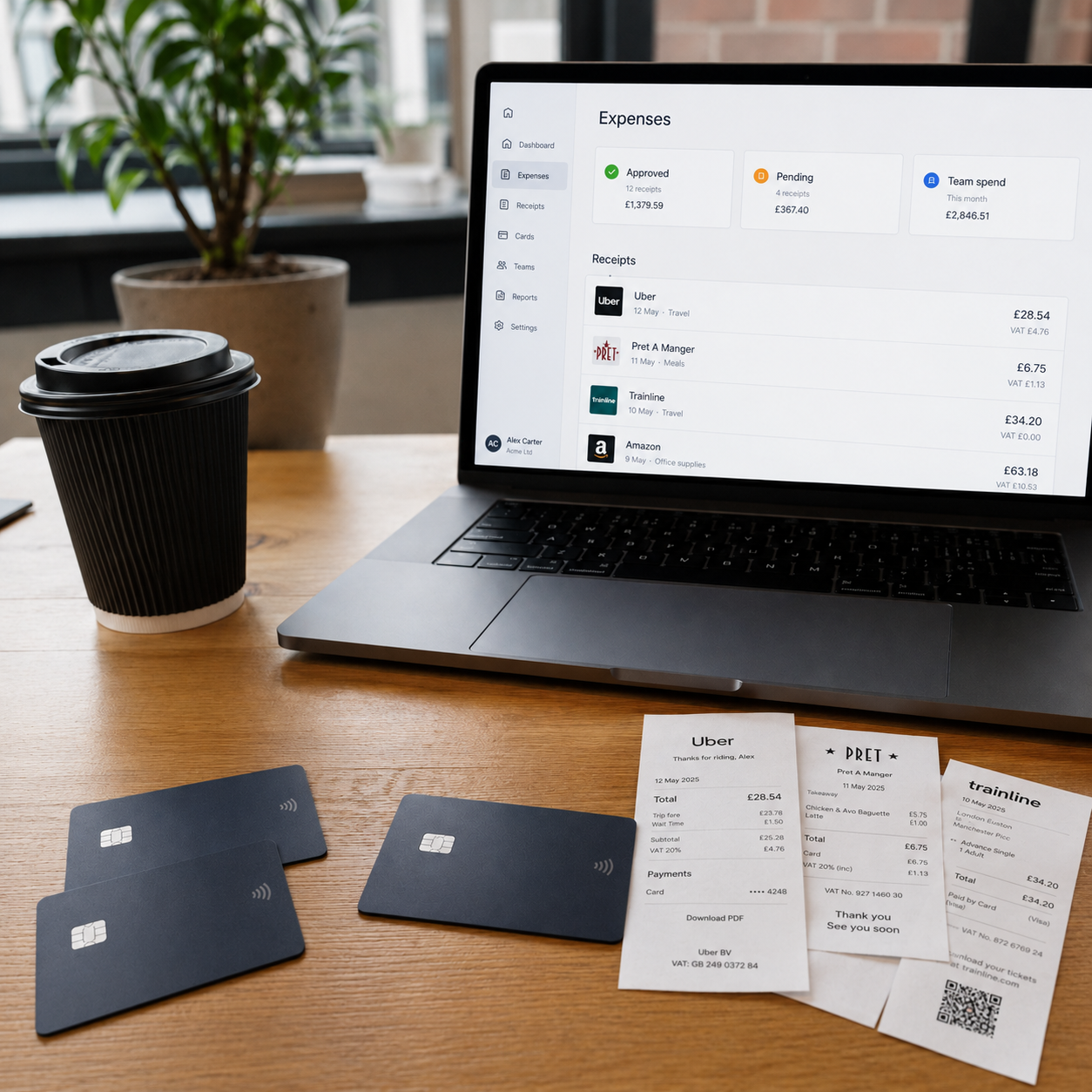
Business expense cards are company-issued payment cards that give employees the ability to make business purchases without using personal funds. Modern expense card platforms — including Pleo, Soldo, Equals Money, and Airplus — go beyond a simple card: they provide real-time spend visibility, per-card spending limits and category restrictions, mobile receipt capture, automatic transaction categorisation, and direct integration with accounting software. They eliminate the traditional expense claim process almost entirely.
The average cost of processing a single manual expense claim is estimated at £25–£50 when staff time is accounted for. Traditional expense processes are slow, error-prone, and provide zero visibility of spend until month end. Business expense cards give finance teams real-time visibility of all company spending, enforce policy automatically, and integrate directly with accounting software — reducing processing costs by up to 75% and eliminating the monthly receipt chase.
![[headshot]](https://cdn.prod.website-files.com/69b5c32fee9766011b68547b/69b82cced39ba3055dad461a_Untitled%20design%20(16).png)
![[headshot] image of customer (for a dental office)](https://cdn.prod.website-files.com/69b5c32fee9766011b68547b/69b82ccf27c4f98621ebd3e7_Untitled%20design%20(17).png)
![[headshot] image of customer for an insurance agency & company](https://cdn.prod.website-files.com/69b5c32fee9766011b68547b/69b82ccf317632a73a2e7ee5_Untitled%20design%20(18).png)

Explore top UK suppliers and save on essential services. Compare options side by side to find the best fit for your business needs.
Find the best deals on business electricity, gas, water, and broadband. Save time and reduce costs with tailored quotes.
Compare business loans, asset finance, and more. Access flexible funding options to support your company’s growth.
Protect your business with the right cover. Compare public liability, professional indemnity, and other key policies.
Upgrade your business communications. Compare broadband, leased lines, and IT support for seamless operations.
Find cleaning, maintenance, and security providers. Keep your workplace running smoothly and safely.
Discover the best business software for your needs. Compare CRM, marketing, and productivity tools to improve efficiency and support your growth.
Common questions from businesses evaluating expense card options.